Trying to pick the right Skye Canyon village can feel like comparing apples to oranges. You are weighing different home types, amenity access, and layered HOA fees while trying to picture your daily routine. This guide simplifies the decision with a clear framework you can use to compare villages side by side. You will learn how amenities, homes, and fees work across Skye Canyon and get a checklist for touring with confidence. Let’s dive in.
Skye Canyon at a glance
Skye Canyon is a master-planned community in Clark County within the northern Las Vegas Valley. The master plan bundles multiple villages, each with its own identity and sub-association. Some villages are still building while others are mostly resale.
Community life centers on shared amenities, parks, and trails, with each village tying into the master design. The details below help you understand how those pieces fit together so you can compare villages with clarity.
Home types by village
Different Skye Canyon villages offer different products and layouts. Use these notes to match your needs.
Detached single-family
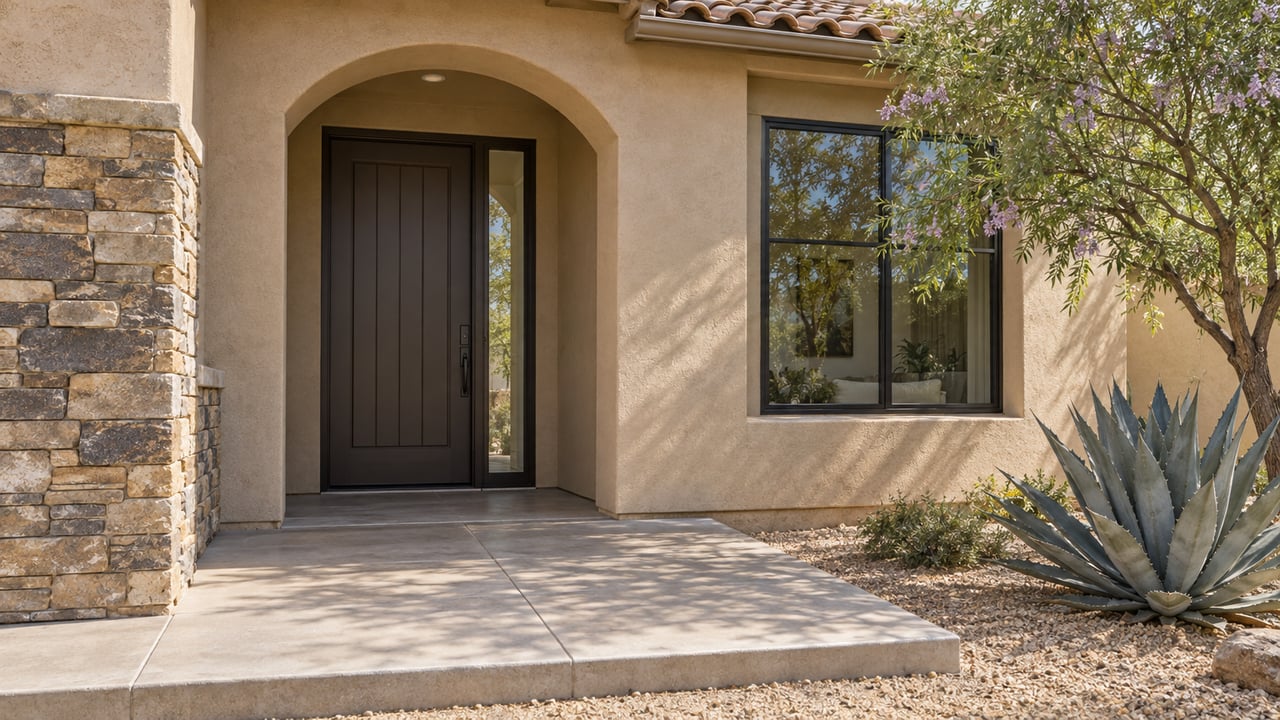
Many villages feature detached single-family homes with one or two stories. Floorplans vary by builder, and lot sizes can range from compact to more traditional suburban lots. If a yard or privacy matters most, start your search here.
Townhomes and patio homes
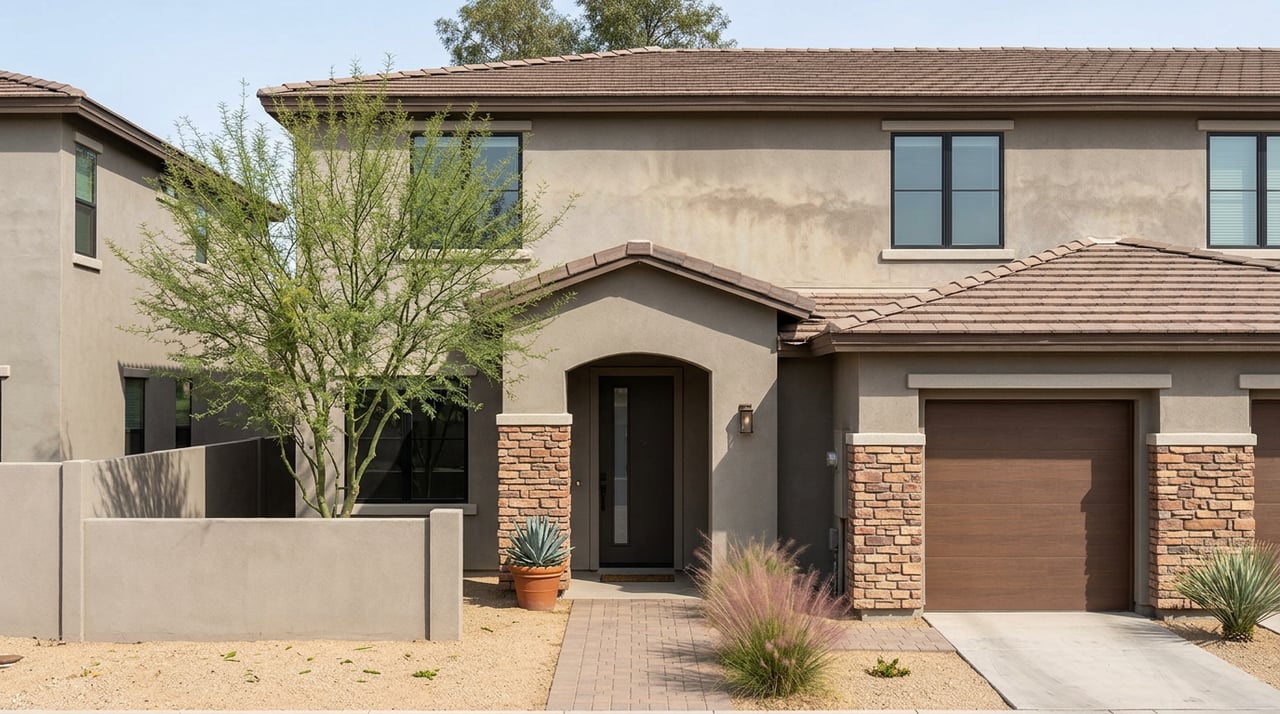
Some villages include paired homes, townhomes, or patio-home products. These often appeal if you want a lower-maintenance lifestyle or a smaller footprint while staying close to parks and trails. Exterior maintenance can be handled by the sub-association in certain products. Always verify what the HOA covers.
New construction vs resale
Villages can be in different stages. Active-building areas may offer builder incentives or design center choices. Built-out villages offer established landscaping and known resale patterns. Confirm timelines for builder-to-owner HOA control since that can affect fees and rules.
Amenity access explained
Skye Canyon combines master amenities with neighborhood features. Not every village has the same access or distance to each feature.
Master clubhouse and pools
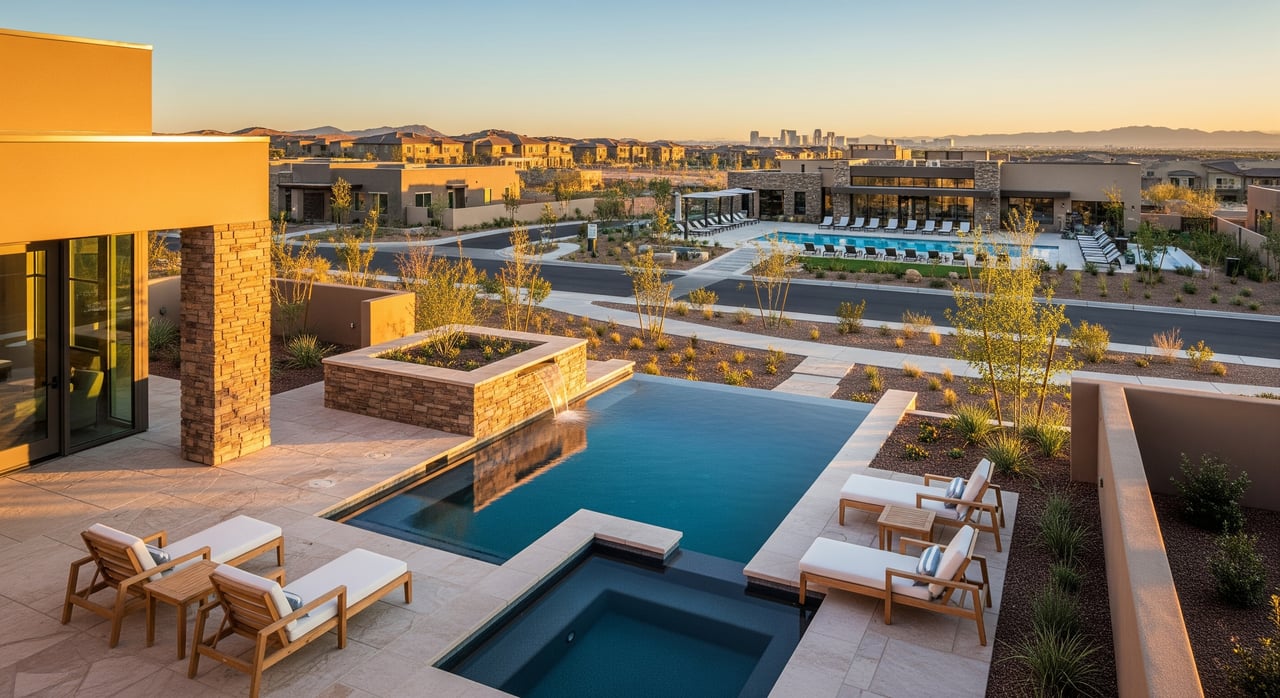
The master association typically oversees community-wide amenities like a clubhouse, fitness, resort-style pools, and meeting spaces. Access is usually included through the master HOA, with some activities or guest access offered for an extra fee. Confirm the current amenity list and any program costs.
Pocket parks and trails
Villages may include pocket parks, small play areas, dog spots, or plazas. Trails and open space connect through the master plan, but some villages have more direct access than others. When touring, walk the route to the nearest park to gauge real-world convenience.
Walkability vs short drive
To compare villages, time the walk to the closest park using a mapping app in walking mode. For errands, check typical drive minutes at representative times. Consider whether routes require crossing arterial streets or using a vehicle.
HOA structure and fees
Skye Canyon commonly uses a two-tier HOA system. Understanding who does what helps you compare true monthly costs and responsibilities.
Two-tier structure
- Master association: manages community-wide amenities, large parks and trails, common-area landscaping, and broad covenants.
- Sub-association: manages village-level standards, pocket parks, and any private gates or maintenance-included features. Architectural review often happens at the village level.
What fees usually cover
Fees usually include common-area landscaping, amenity operations, insurance for common elements, and reserves. Some sub-associations add security for gates or exterior maintenance for certain home types. Always review the CC&Rs and fee sheet for specifics, including billing frequency.
Red flags to investigate
- Frequent or large fee increases
- Repeated special assessments
- Low reserve levels in recent studies
- Ambiguous maintenance responsibilities between master and sub-association
- Unclear architectural review timelines or strict rules that do not fit your plans
Proximity to parks and shopping
Your daily rhythm matters as much as your floorplan.
Parks and open space
Note the walking minutes to the closest park or pocket green. Observe whether the route feels straightforward and if there are barriers. A two-minute difference can change your routine if you go often.
Shopping and errands
Measure drive times to grocery, pharmacy, and big-box retail at a weekday morning and a weekend afternoon. Record the times you checked. This gives you a consistent baseline to compare villages.
Commute corridors
Identify your nearest major arterial or highway access and check typical drive times to your frequent destinations. Confirm at more than one time of day to get a realistic range.
How to compare villages
Use the steps below to build a clear, apples-to-apples view of your top choices.
- Confirm official names
- Use official subdivision names from MLS and the county assessor. These are your search keys and prevent mix-ups.
- Verify HOA details
- Request the current master and sub-association fee sheets, CC&Rs, bylaws, and any recent meeting minutes. Note what each fee covers and how often it is billed.
- Map your lifestyle
- Walk to the nearest park and trace your route to the master clubhouse. Measure driving minutes to routine errands and your commute.
- Check product fit
- Note product type, size range, lot character, and whether homes are new construction or resale. Confirm exterior maintenance responsibilities if you want low upkeep.
- Build your side-by-side matrix
- Fill in the table below for your shortlisted villages. Ask your agent to validate each cell with MLS IDs and HOA documents.
| Village | Product mix | Sq ft range | Lot sizes | New/Resale | Village amenities | Master amenities access | Master HOA fee | Sub HOA fee | Fees cover | Distance to park (walk/min) | Distance to grocery (drive/min) | Typical price band | Notes |
|---|---|---|---|---|---|---|---|---|---|---|---|---|---|
| Village 1 | |||||||||||||
| Village 2 | |||||||||||||
| Village 3 |
Price bands without guesswork
Price ranges change quickly. Use a repeatable method so you can compare villages with confidence.
- Step 1: Pull 12 months of solds and 90 days of actives for each official subdivision name in MLS. Confirm parcels with the county assessor.
- Step 2: Segment by product type, then compute medians and interquartile ranges separately for townhomes versus detached homes.
- Step 3: Report three clear bands per village: Entry, Typical, and Upper. Note the sample size and date range.
- Step 4: Update the “data pulled on” date whenever you refresh. Flag low confidence if there are fewer than six transactions.
Include a short note under any ranges you publish:
“Price bands compiled from MLS and assessor data for [subdivision name] from [start date] to [end date]. Sample size: N solds, M actives. Data pulled on [date]. Ranges exclude extreme outliers.”
Smart checks before you offer
A little verification up front protects your budget and timeline.
- Confirm whether any special assessments are pending or recently approved.
- Ask when builder control ends and owner control begins for the sub-association.
- Review the architectural review process timeline if you plan exterior changes.
- Clarify which utilities, if any, are included in HOA dues.
- Scan recent HOA minutes for fee discussions or maintenance concerns.
Tour-day checklist
Bring this list when you visit your top villages.
- Walk from the front door to the nearest park or play area and note any busy street crossings.
- Trace the route to the master clubhouse and decide whether you would walk or drive.
- Ask for the latest HOA fee sheet and any notices about special assessments or increases.
- Review architectural guidelines or ask how long exterior approvals typically take.
- Note landscaping care in front yards and common areas for a sense of upkeep.
How we help
You do not need to assemble this alone. With local expertise and a concierge approach, we will build your custom village matrix, verify master and sub-HOA details, and prepare current price-band reports with sample sizes and dates. If you are relocating, we can handle virtual tours and timeline planning so your decision feels easy and informed.
Ready to compare your top Skye Canyon villages with clarity? Reach out to Alexandria Mcgurk for a personal walkthrough and a data-backed plan.
FAQs
What is a two-tier HOA in Skye Canyon?
- Most villages participate in a master association for community-wide amenities plus a sub-association that handles village standards, pocket parks, and any maintenance-included features.
How do I know what my HOA fees cover?
- Request the latest master and sub-association fee sheets and CC&Rs, then confirm billing frequency, what is included, and any recent or pending assessments.
Which villages are closest to parks and clubhouse?
- Walk the route during your tour and time it using a mapping app in walking mode. Note if you must cross arterials or if the path is direct and comfortable.
How can I compare price ranges fairly?
- Pull 12 months of solds and 90 days of actives by official subdivision name, segment by product type, then report Entry, Typical, and Upper bands with sample size and date.
What should I watch for in HOA rules?
- Review architectural review timelines, exterior standards that affect your plans, and minutes that mention fee changes, reserve levels, or special assessments.
Are any villages still building new homes?
- Some villages may have active construction while others are built out. Verify status in MLS and with the sub-association, and ask about builder incentives and HOA transition timing.